Momentum · Consumer app
Most productivity tools are built for a student who already has motivation. I designed Momentum for the one who doesn't.
Motivation in college is a state, not a trait. It moves with sleep, workload, and energy, and it collapses at the point when the stakes are highest. The students who fall behind are rarely disorganized. They are depleted. Existing tools make that worse. They demand constant input and reward streaks, so they fail on the exact day a student needs them and turn a missed day into guilt.
The bet: design for the worst day. If it works when a student has nothing left, it works on the good days for free.
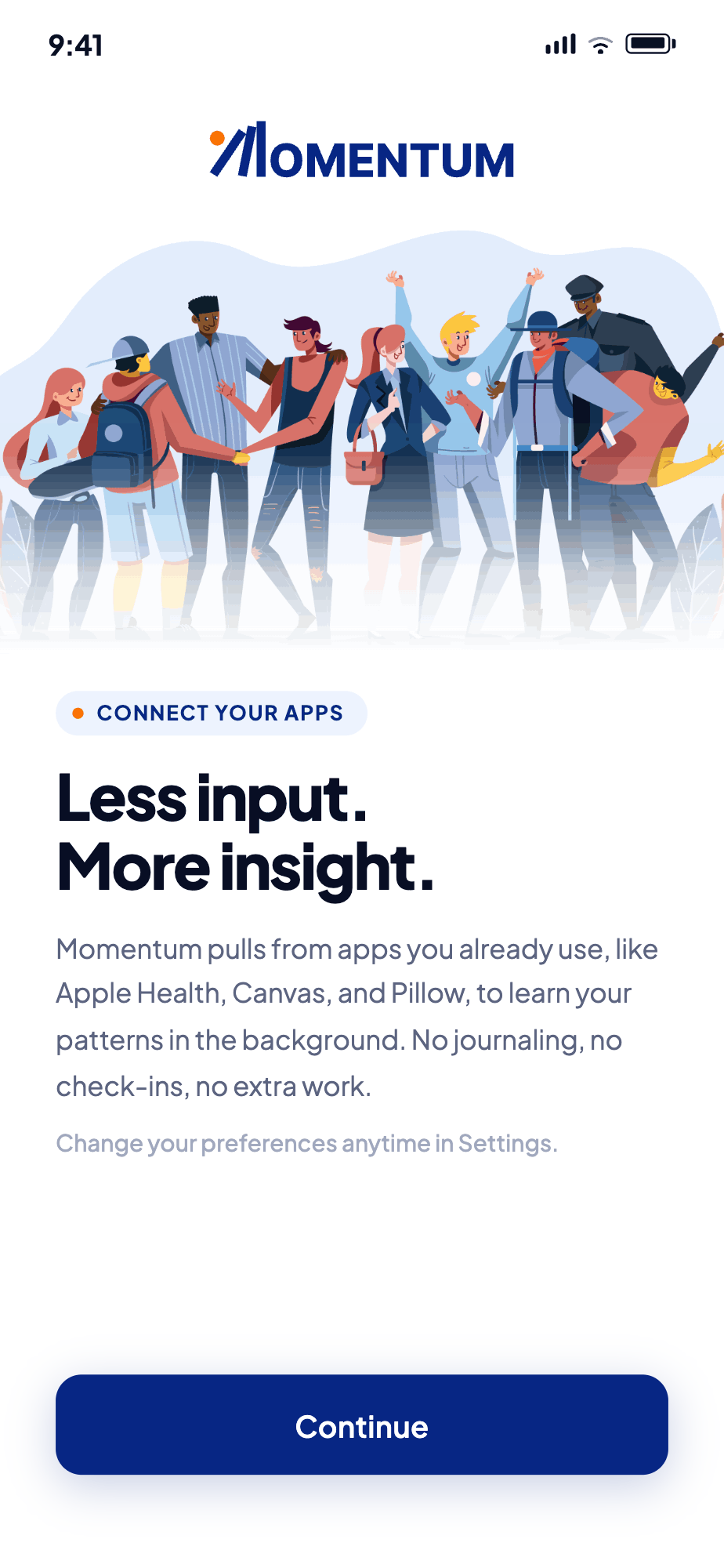
A depleted student cannot reliably report what is holding them back. Awareness is the one thing they do not have to spare. So Momentum pulls from apps students already use, like Canvas, sleep, screen time, and mood, and reflects the patterns back, including how something like late-night screen time is quietly shaping their focus. I cut journaling, daily check-ins, and manual mood logging, because every input is a cost on the day that matters most.
Momentum learns from data students already generate, so the experience needs zero manual tracking.

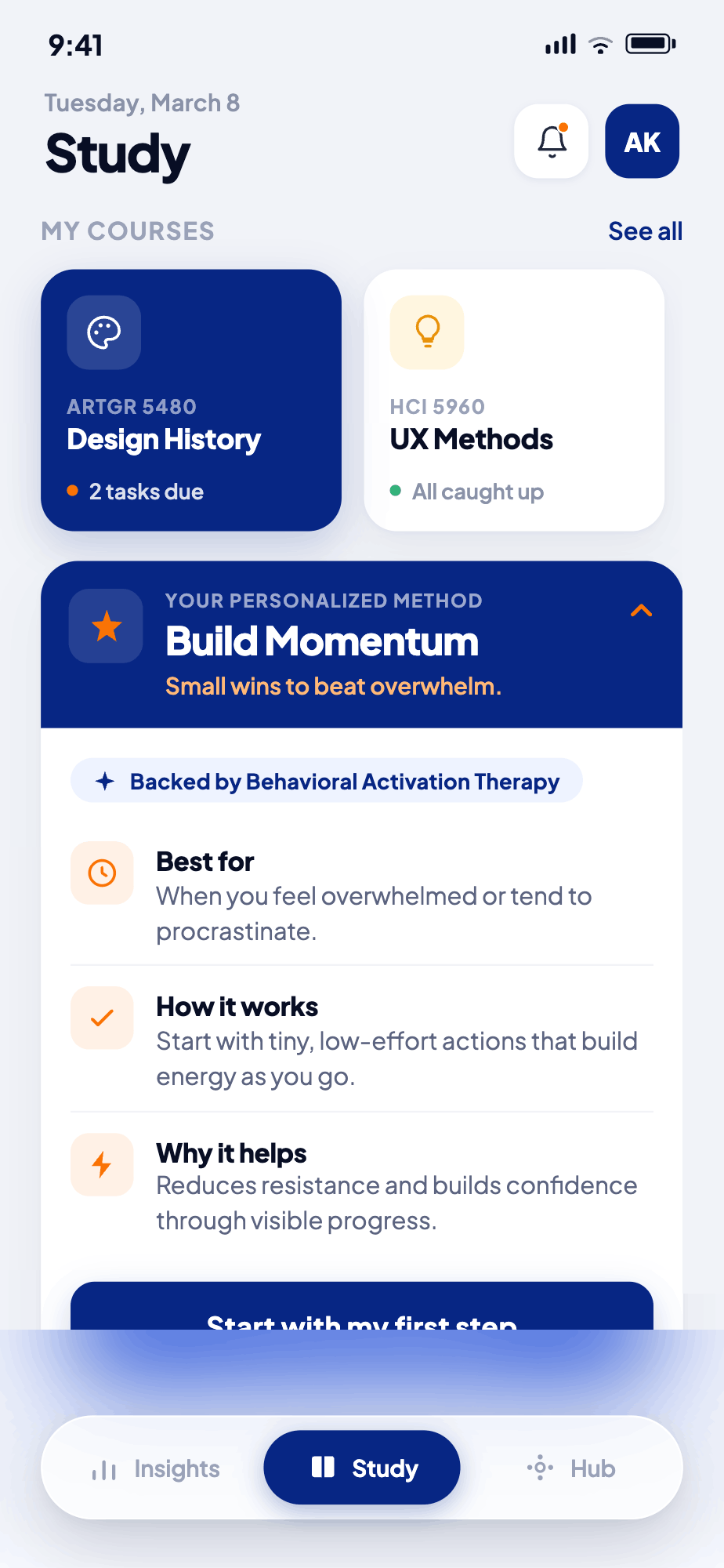
A method that transforms one person can leave another feeling helpless. Think of everyone who has bounced off Notion. So Momentum assigns one of five research-backed strategies based on a student's current behavior, and re-matches as that behavior changes. There is no menu to pick from. Choice is load, and load was the enemy.
One of five strategies, each grounded in a behavioral theory, matched to the student's current state.
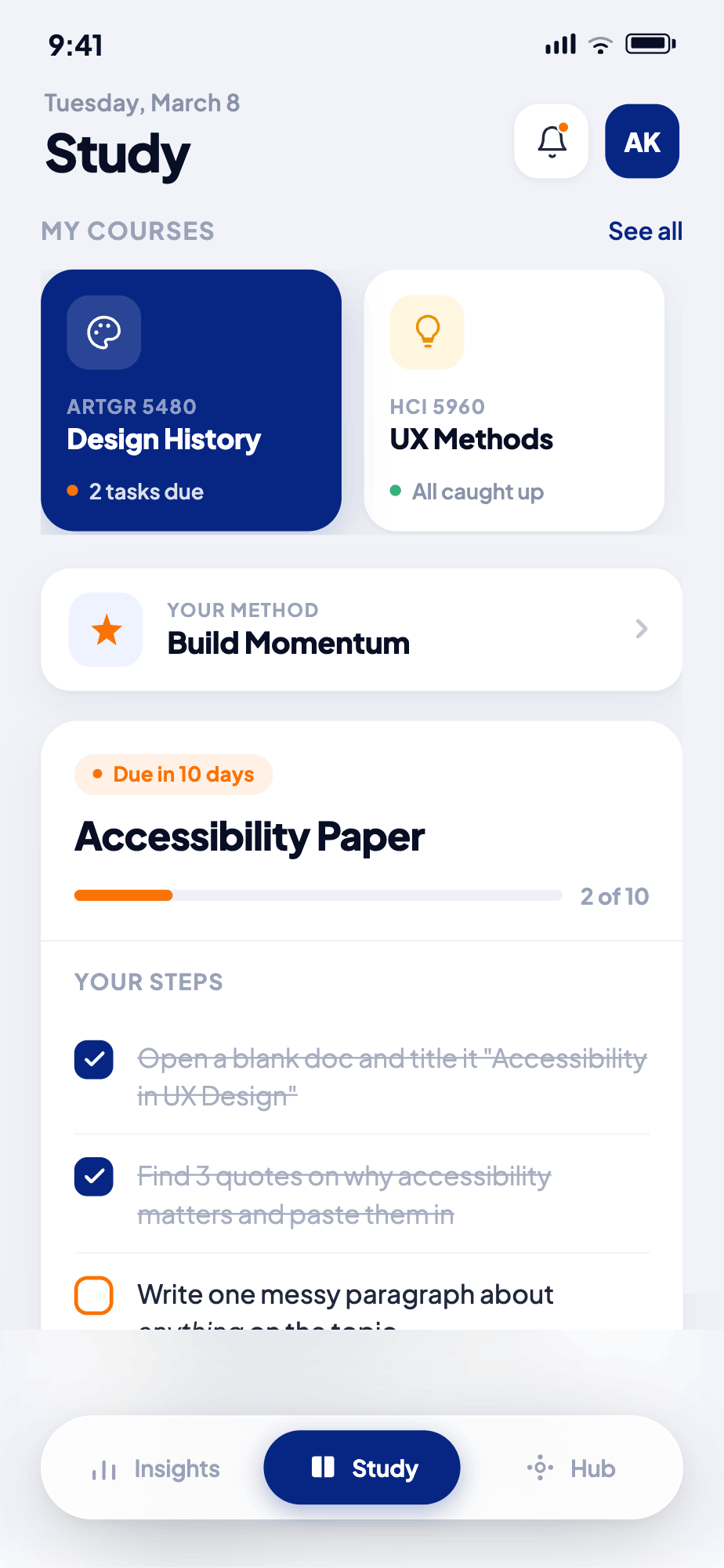
The hardest moment is starting. Momentum never shows "write the paper." It shows "open the doc and write one messy paragraph," so the first action is always doable, even on a bad day.
Every task is reduced to a first step small enough to beat avoidance.
I shaped this through ongoing informal conversations with students and put the prototype in front of them throughout the eight months. I treat that as direction, not proof. To validate it properly I would run a concept test on the reframe, diary studies across a full semester, and a Wizard-of-Oz test of the matching logic before building it, tracking task initiation and follow-through on hard days rather than time in the app.
Momentum is a bet that the best thing a motivation tool can do is ask less of you when you have the least to give.